
UC Merced is a proud first time recipient of the 2026 EPEAT Purchaser Awards for Sustainable Electronics Procurement.
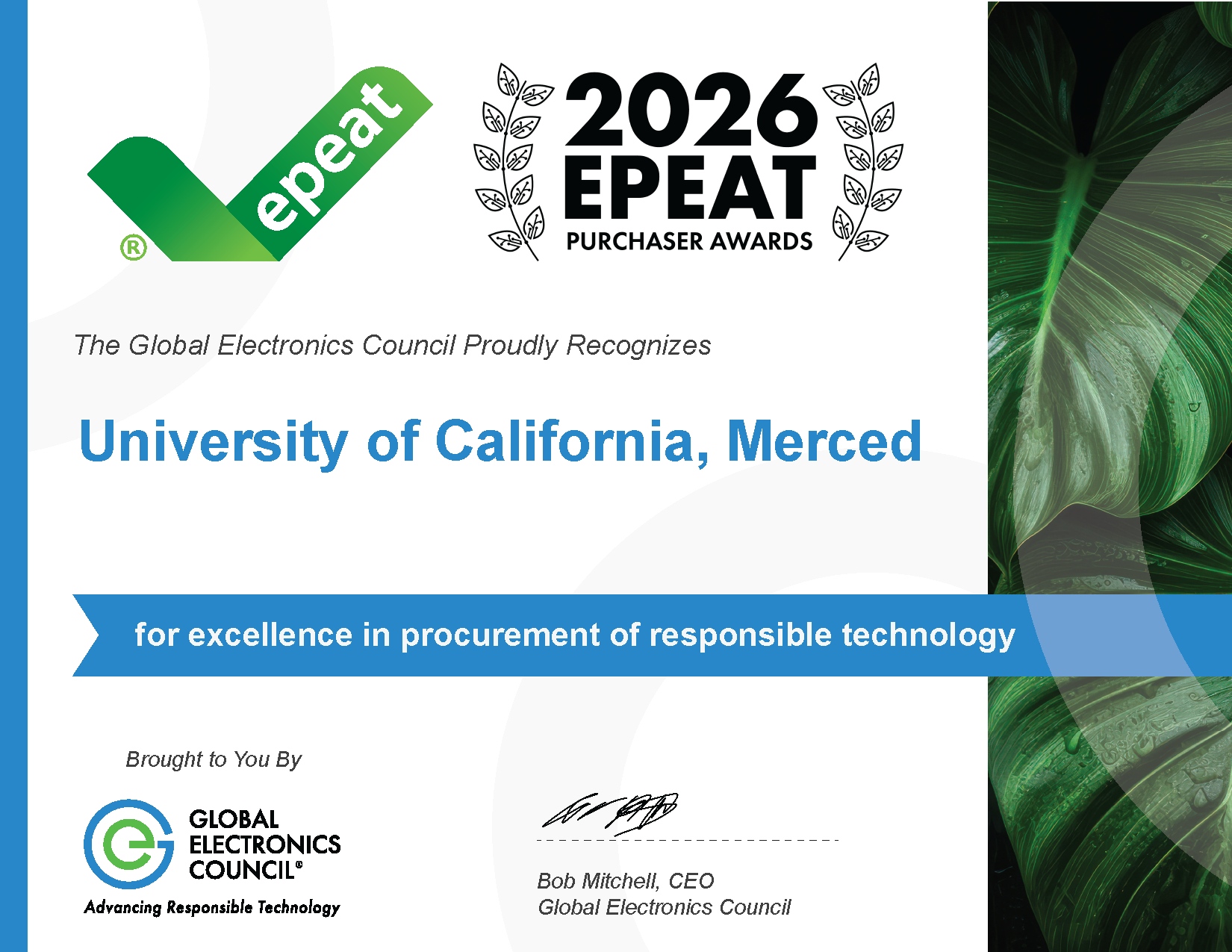
This achievement reflects the strong partnership between Procurement, Sustainability, and our supplier community in making responsible electronics purchasing both attainable and impactful. As a campus founded on innovation and sustainability, we are proud to contribute to a more sustainable electronics marketplace. | UCOP EPEAT News
UC’s institutional sustainability commitment began in 2003 through a student initiative that led to the UC Regents adopting the Presidential Policy on Green Building Design and Clean Energy Standards in 2004. The Sustainable Practices Policy has been expanded over the years to include many policy areas.
UC reports progress toward the goals outlined in the policy in the UC Annual Report on Sustainable Practices. UC’s efforts in climate and sustainability are supported by several presidential initiatives, including the Carbon Neutrality Initiative, Global Food Initiative, and Innovation and Entrepreneurship Initiative.
The University of California’s Sustainable Procurement Guidelines lay out the minimum sustainability requirements for products and services purchased by the University of California and identify those product attributes that are strongly preferred, if not mandatory. The guidelines act as a companion to the Sustainable Procurement Policy and Procedure Sections of the UC Sustainable Practices Policy.
In general terms, the UC Sustainable Practices Policy outlines targets for sustainable procurement as well as requirements for UC sustainable procurement practices, i.e. the activities of University of California buyers as they relate to sustainable procurement. This document breaks down what UC considers to be sustainable at the product, product category, service or industry level.
The UC Sustainable Practices Policy prioritizes waste reduction in the following order: reduce, reuse, and then recycle. Accordingly, sustainable procurement should look to reduce unnecessary purchasing first, then prioritize purchase of surplus or multiple-use products, before looking at recyclable, compostable, or otherwise sustainable products.


